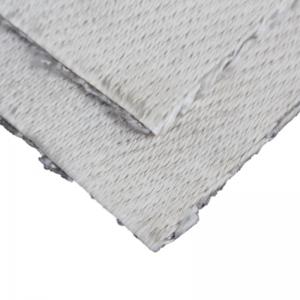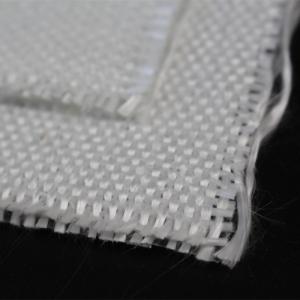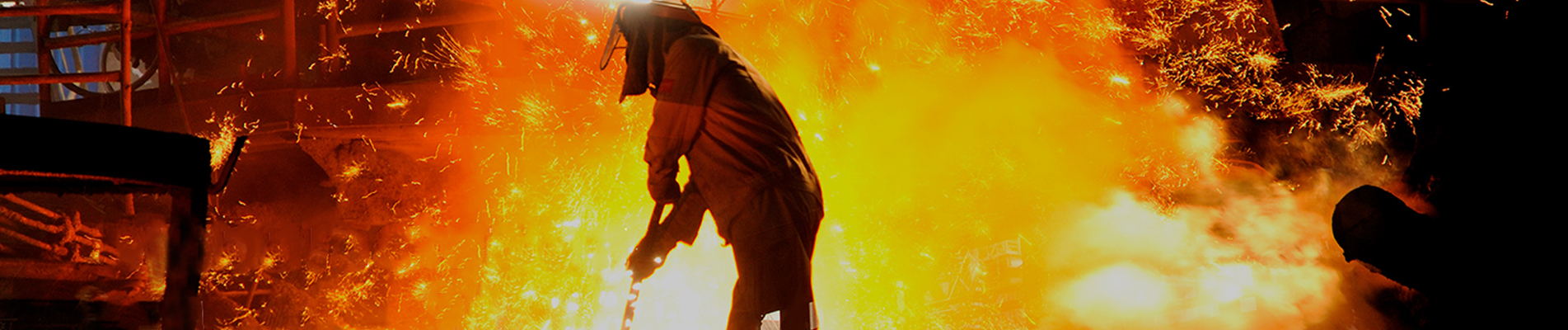
Heat treated fiberglass fabric is woven fiberglass cloth that receives a controlled high-temperature treatment after weaving to reduce organic sizing and processing residues from the textile. The process is commonly called heat treatment, heat cleaning or heat cleaned fiberglass processing.
The purpose is not to convert ordinary fiberglass into a different high-temperature fiber. Instead, heat cleaning changes the surface condition of the existing fiberglass cloth and can reduce the smoke and odor associated with organic processing materials during initial high-temperature exposure.
BSTFLEX supplies Heat Treated Fiberglass Fabric in both filament and texturized constructions for removable insulation covers, welding protection, thermal barriers, lagging and industrial fabrication.
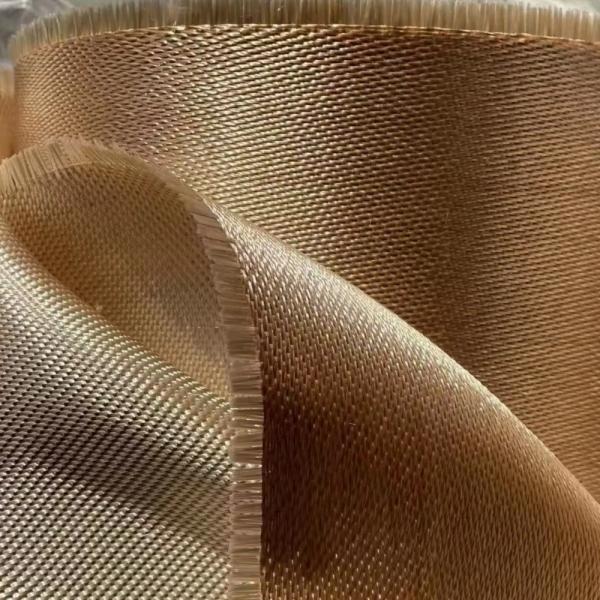
Heat cleaning primarily removes or reduces organic materials used during fiberglass yarn and weaving production.
Depending on the exact construction and process, heat treatment can:
Heat treatment does not automatically:
Fiberglass yarn normally uses sizing and processing aids to protect the filaments during manufacturing, weaving and handling. These materials can include organic components that help the yarn pass through textile equipment without excessive fiber damage.
When untreated fiberglass is exposed to high temperature for the first time, some of these organic materials can decompose and produce temporary smoke, odor or discoloration.
A heat-cleaning process exposes the finished fabric to elevated temperature in a controlled production step so that a substantial portion of these materials is removed before the cloth reaches the customer's application.
This is particularly useful when the finished textile will be installed in an environment where initial smoke or odor is undesirable.
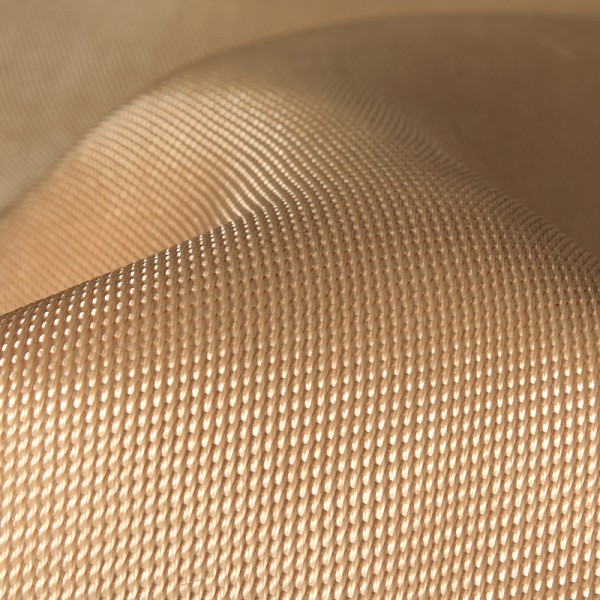
Heat cleaned fiberglass is often described commercially as “smoke-free” fiberglass fabric because the treatment removes much of the organic sizing that would otherwise burn off during initial heating.
For engineering specifications, however, it is better to define the actual requirement rather than rely only on the phrase “smoke-free.”
Heat treatment can substantially reduce smoke and odor associated with organic processing residues, but the final behavior can still depend on:
If a project has a formal smoke, odor or emissions requirement, state the required test method and acceptance criterion in the RFQ.
In the high-temperature textile market, “heat treated” and “heat cleaned” are often used for closely related processing in which fiberglass cloth is exposed to elevated temperature to reduce sizing and organic residues.
However, the exact process can differ between suppliers.
For purchasing, do not assume that two materials are identical simply because one supplier calls its product “heat treated” and another calls it “heat cleaned.”
Compare:
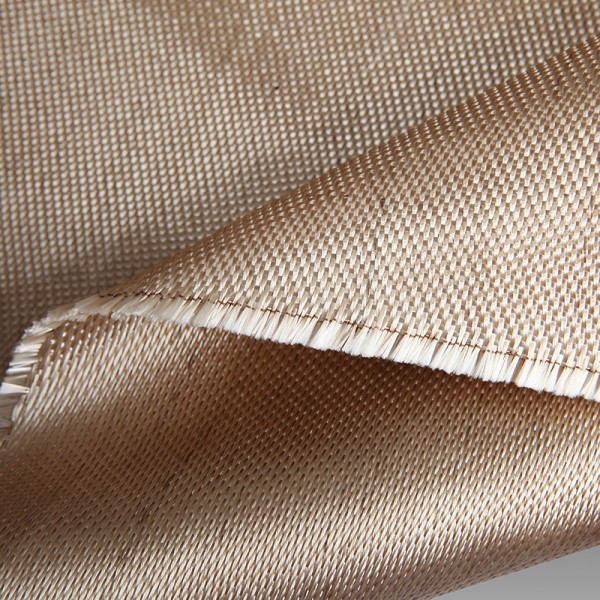
Loomstate fiberglass fabric is woven cloth supplied with much of its original textile sizing and processing finish still present.
Heat treated fiberglass undergoes an additional thermal-processing step after weaving.
| Property | Loomstate fiberglass | Heat treated fiberglass |
|---|---|---|
| Organic sizing | Generally remains on the yarn | Substantially reduced by heat treatment |
| Initial smoke during heating | Can be more noticeable | Typically reduced |
| Typical color | White or off-white | Often tan, brown or golden after treatment |
| Surface condition | Original woven finish | Heat-cleaned surface |
| Use near high-temperature equipment | Possible where initial burn-off is acceptable | Often preferred where reduced initial smoke is required |
| Water or oil resistance | Requires suitable treatment or coating | Heat cleaning alone does not provide it |
This distinction is important because both terms appear frequently in industrial fiberglass specifications.
Heat treatment is a finishing process applied to woven fabric.
Texturizing changes the physical structure of the fiberglass yarn before it is woven.
Texturized yarn is mechanically bulked, producing a thicker and fuller textile. Heat treatment, by contrast, reduces sizing and organic processing residues.
This means a fabric can be:
The current BSTFLEX p108 range includes both filament and texturized heat-treated constructions.
For a detailed explanation of yarn construction, see BSTFLEX Texturized Fiberglass Fabric.
| Reference | Fiberglass construction | Nominal weight | Nominal thickness |
|---|---|---|---|
| FGF-HT-0.43 | Filament | 430 g/m² | 0.43 mm |
| FGF-HT-0.6 | Filament | 600 g/m² | 0.60 mm |
| FGF-HT-0.8 | Filament | 850 g/m² | 0.80 mm |
| FGF-HT-0.8T | Texturized | 600 g/m² | 0.80 mm |
| FGF-HT-1 | Texturized | 800 g/m² | 1.00 mm |
| FGF-HT-1.5 | Texturized | 1000 g/m² | 1.50 mm |
| FGF-HT-2 | Texturized | 1300 g/m² | 2.00 mm |
| FGF-HT-2.5 | Texturized | 1600 g/m² | 2.50 mm |
| FGF-HT-3 | Texturized | 1800 g/m² | 3.00 mm |
The presence of both filament and texturized constructions means buyers should not order simply by the phrase “heat treated fiberglass cloth.” Thickness, weight and yarn structure should be stated in the purchase specification.
Heat cleaning should not automatically be interpreted as a method for increasing the basic temperature capability of fiberglass.
The main purpose of the process is removing organic processing materials and modifying the surface condition of the fabric.
The service temperature of the finished textile still depends on:
Buyers should use the temperature specification for the exact quoted grade rather than applying a generic fiberglass melting point or another supplier's temperature rating.
A common error in high-temperature textile specifications is treating the glass melting or softening temperature as the recommended continuous operating temperature of the finished fabric.
These values answer different questions.
| Temperature term | What it describes |
|---|---|
| Continuous working temperature | The temperature range intended for prolonged service under defined conditions |
| Intermittent temperature | A higher temperature permitted for limited duration under defined conditions |
| Glass softening or melting behavior | A material property of the glass itself, not a recommended fabric service condition |
| First heat exposure | Can involve removal or decomposition of residual organic material |
When temperature is important to the project, request continuous and short-term values for the exact fabric construction and define the required exposure duration.
These products solve different problems.
Heat treated fiberglass is generally selected when the buyer wants an uncoated high-temperature textile with reduced organic sizing.
Silicone Coated Fiberglass Fabric adds a flexible polymer surface that improves moisture resistance, oil resistance, weather resistance and handling durability.
| Requirement | Heat treated fiberglass | Silicone coated fiberglass |
|---|---|---|
| Reduced original sizing | Primary advantage | Depends on base-fabric preparation |
| Uncoated glass surface | Yes | No |
| Water-resistant coated surface | No | Yes, depending on grade |
| Oil and weather exposure | Requires application-specific protection | Often selected for these conditions |
| Typical jacket position | Hot-side or internal fabric | Often external cover |
Heat treated fiberglass remains an uncoated or minimally treated glass textile after organic sizing is reduced.
Vermiculite Coated Fiberglass Fabric receives an additional mineral treatment designed for more severe thermal and abrasion exposure.
Evaluate vermiculite-treated material where applications involve:
Heat treated fiberglass can be more appropriate when the requirement is primarily a clean, flexible, uncoated fiberglass textile without the additional mineral surface treatment.
Heat treated fiberglass is commonly used as an internal fabric in removable insulation covers.
Possible functions include:
The reduced organic content can be useful when the liner experiences elevated temperature during initial operation.
The outside of the jacket may use another material, such as silicone coated fiberglass, where moisture, oil, weathering and repeated handling are important.
See the Removable Insulation Blankets range for complete fabricated systems.
Heat cleaned fiberglass fabric can be converted into welding curtains, spark barriers and blankets for suitable hot-work applications.
Its suitability depends on:
Heat cleaning reduces organic processing material but does not itself qualify the fabric for every welding process.
BSTFLEX also supplies Heat Cleaned Fiberglass Welding Blanket Roll for distributors, converters and OEM fabricators requiring roll material for cutting and sewing.
Additional finished products are available in the Welding & Soldering Area Protection category.
Heat treated fiberglass can be used as a facing or retaining textile around industrial insulation.
Typical applications include:
The fabric itself should not be treated as the full thermal-insulation layer. Heat-loss reduction normally depends mainly on the underlying insulation material and thickness.
Heat treated fiberglass may be used for industrial thermal curtains and general heat barriers where an uncoated glass textile is suitable.
If the curtain is part of a regulated fire-protection or smoke-control system, the complete finished product must meet the required system-level test and installation criteria.
A generic heat-treated cloth should not automatically be described as a certified fire curtain.
Heat treatment can also be used as a preparation step before selected secondary processing.
Depending on the product design, the fabric may later receive:
The finished composite must then be specified according to the new coating or laminate. The properties of the heat-treated base cloth alone cannot be used as the final product specification.
Heat treatment can help stabilize some woven fiberglass constructions and may reduce loose fibers or fraying during cutting compared with an untreated equivalent.
However, cut-edge behavior still depends on:
For repetitive fabrication, buyers should test the actual production grade using the intended cutting and sewing process.
Heat treated fiberglass can be cut and sewn into blankets, curtains, covers and fabricated thermal components.
Before production, define:
The sewing thread should be selected according to the temperature and mechanical load at the seam. A high-temperature fiberglass fabric does not automatically make a lower-rated thread suitable for the same conditions.
The current BSTFLEX range contains both options.
Do not specify only “heat treated fiberglass fabric” when either construction could materially affect the finished product.
| RFQ item | Information to provide |
|---|---|
| Application | Insulation cover, welding blanket, lagging, curtain, thermal barrier or further coating |
| Yarn construction | Filament, texturized or supplier recommendation |
| Fabric weight | Required g/m² and tolerance |
| Thickness | Nominal thickness and tolerance |
| Width | Usable roll width |
| Roll length | Required length or packaging format |
| Temperature | Continuous temperature at the fabric and any temporary peaks |
| Smoke requirement | General reduced initial smoke or a defined customer test requirement |
| Surface requirement | Heat cleaned only or subsequent coating/lamination |
| Mechanical data | Tensile, tear, dimensional stability or other required values |
| Fabrication | Roll material, cut panels, sewn component or finished blanket |
| Quantity | Sample, trial order, project demand or repeat OEM volume |
If replacing an existing fabric, send the current specification or a physical sample. Color alone is not enough to identify a heat-treated fiberglass construction.
It is woven fiberglass cloth that receives an additional high-temperature processing step after weaving to reduce organic sizing and processing residues.
The terms are often used for closely related processes, but suppliers may use different treatment temperatures and production methods. The exact fabric specification should be compared rather than relying only on terminology.
The tan or brown appearance commonly results from the heat-treatment process and changes in residual material on the fiberglass surface. Color should not be used as the only product identification method.
Heat cleaning can substantially reduce initial smoke associated with organic sizing, but an absolute smoke-free requirement should be defined by a test method or customer specification. Later coatings, adhesives and contamination can also affect smoke behavior.
The primary purpose is reducing organic residues rather than converting the fiberglass into a higher-temperature fiber. The service temperature must be confirmed for the exact finished construction.
No. Texturizing changes the fiberglass yarn structure before weaving. Heat treatment is a finishing operation applied to woven fabric. A texturized fabric can also be heat treated.
Yes. It can be used as a base for selected silicone, PTFE, vermiculite, graphite, aluminum and other finishing systems. The final coated composite requires its own specification.
Yes, suitable grades can be used for welding curtains and blankets. The required construction depends on sparks, spatter, slag, orientation, temperature and any required qualification standard.
Yes. Heat treated fiberglass is commonly used as an internal or hot-side textile in removable insulation assemblies. The complete cover may use different materials for the insulation core and environmental outer shell.
BSTFLEX supplies Heat Treated Fiberglass Fabric in filament and texturized constructions from approximately 0.43 mm to 3.0 mm for industrial insulation, welding protection and thermal fabrication.
Send the required thickness, weight, width, temperature, application, smoke requirement and quantity. For repeat or replacement projects, provide the existing specification or sample so the yarn construction and heat treatment can be matched accurately.
Additional untreated, texturized, coated, reinforced, silica and ceramic textile options are available through the High Temperature Fabric category.
Contact BSTFLEX for material selection, samples and quotation support.

 English
 français
 Deutsch
 русский
 italiano
 português
 Nederlands
 العربية
 日本語
 한국의
 Türkçe
 Polski
 Tiếng Việt
 slovenský
 Indonesia