English
 français
 Deutsch
 русский
 italiano
 português
 Nederlands
 العربية
 日本語
 한국의
 Türkçe
 Polski
 Tiếng Việt
 slovenský
 Indonesia



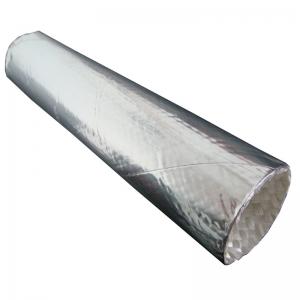
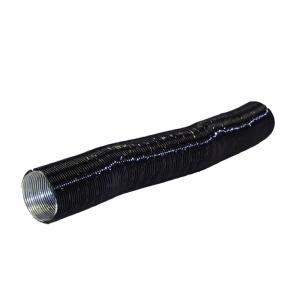
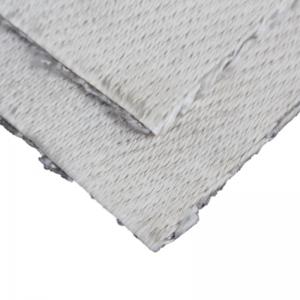
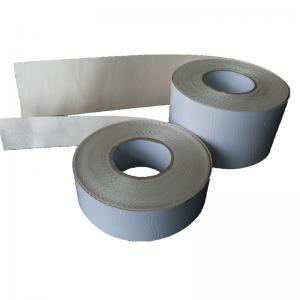
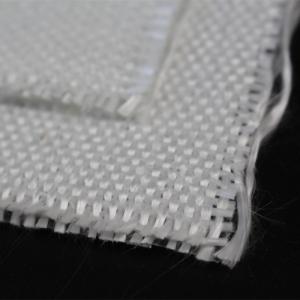
A request for ceramic fiber blanket with aluminum foil describes the appearance of a material, but leaves much of the purchasing specification open. Two quotations can describe the same thickness and still offer different fiber grades, foil constructions and bonds. Those differences matter when the material is fitted into a heated equipment panel, pipe cover or industrial enclosure.
Specify the ceramic fiber core, aluminum facing and foil-to-core bond separately, then confirm how they work together in the installed assembly. Include the temperature at each relevant location, the finished dimensions, the retaining method and the evidence required for approval.
BSTFLEX offers ceramic fiber insulation blanket with aluminum foil as a distinct construction from plain blanket. This guide explains how to turn that product description into a useful inquiry without assigning the core's temperature rating to every layer.
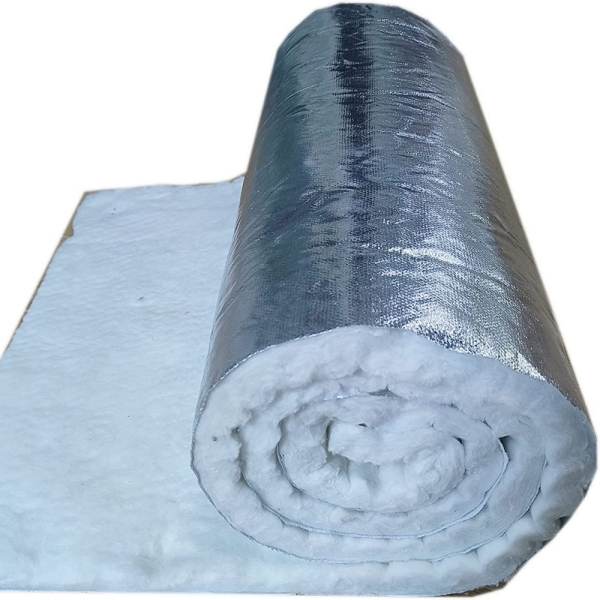
What a Complete Foil-Faced Blanket Quotation Should Identify
| Specification Item | Details to Agree Before Ordering |
|---|---|
| Fiber core | Material identity and grade, nominal thickness, density, relevant thermal data and recommended service conditions. |
| Aluminum facing | Foil construction and thickness, any reinforcement or additional layers, and the face or areas to be covered. |
| Foil-to-core bond | Bonding method, service-temperature conditions and whether the facing must remain bonded throughout operation. |
| Installed arrangement | Hot-side position, foil orientation, contact surfaces, air spaces, compression, joints and retaining details. |
| Supply and approval | Roll or cut-part dimensions, quantity, purchasing unit, tolerances, sample requirements and matching technical documentation. |
Ask the supplier to identify any proposed departure from the request. A quotation that explicitly describes its construction is easier to evaluate than one offering only a maximum temperature and a price per roll.
The Core Rating Is Not the Finished Blanket Rating
A ceramic fiber classification temperature and its recommended continuous service conditions are different information. The selected grade must be assessed for the operating temperature, exposure duration, atmosphere and dimensional-stability requirement. Neither a classification value nor a fiber melting point establishes the service limit of the foil-faced composite.
The layers may also operate at different temperatures. In a particular design, the ceramic core can face a hotter region while the foil and bond remain on a cooler side. That arrangement is acceptable only when the thermal design and supporting evidence show that each layer stays within its approved conditions.
Conversely, placing the foil close to a radiant source may expose the facing and bond to substantial heating even when they do not touch the source. A source temperature alone does not define the temperature reached by the laminate.
Mark the hot-side surface, the foil-to-core interface and the exposed foil face on the drawing. Provide normal operation, short-duration peaks and heating cycles, and identify which temperatures have been measured. Request an assessment of the complete configuration rather than a single unqualified temperature limit.
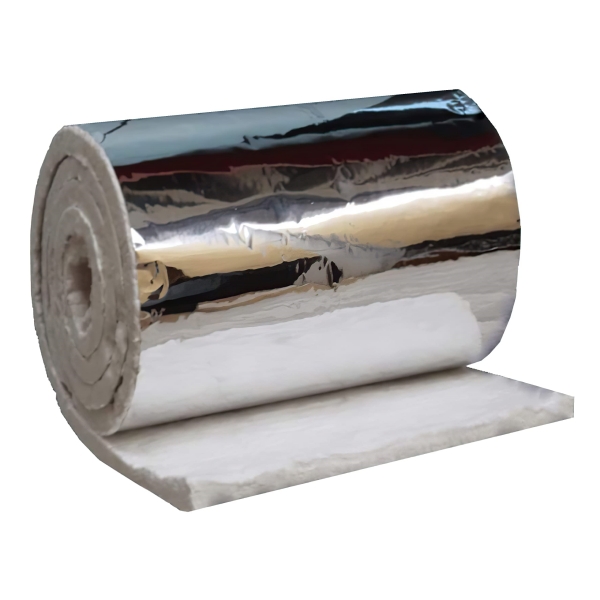
Specify Core Thickness and Density Without Mixing Measurement Bases
Identify the required fiber chemistry and grade rather than relying on the general term ceramic insulation. Do not assume that every ceramic blanket is a refractory ceramic fiber grade or that every alternative is a low-biopersistent fiber. Request documentation for the material actually proposed.
State whether the ordered thickness refers to the bare core or the finished laminate. Also provide the available installed depth and any planned compression. Ask for the thickness tolerance and measurement method so sample inspection and production acceptance use the same basis.
Specify whether density refers to the core alone. A finished laminate's mass includes the facing and bonding materials; dividing that total mass by the core volume does not give the core's density. Where mass per unit area is used for purchasing, identify whether it describes the bare blanket or the complete faced product.
For thermal-conductivity or shrinkage requirements, request the corresponding test conditions. Useful records identify the specimen, temperature and method; shrinkage data also need the exposure duration. Do not transfer the dimensions or thermal data of a plain blanket to a faced construction without confirmation.
Decide What the Aluminum Facing Must Do
Write the purpose of the facing into the specification. A reflective surface in a radiant-heat design is a different requirement from a facing primarily intended to cover the insulation surface during fabrication. When both functions matter, evaluate both.
For radiant-barrier performance, the reflective face needs to border an air space. Foil pressed against a solid surface should not be credited with the same radiant-barrier contribution. This does not mean that the foil must always face inward, outward or directly toward the hottest component; its position must satisfy the thermal layout and the facing's own service conditions.
Specify foil thickness separately from total laminate thickness, with the units clearly stated. Ask whether the proposed facing includes reinforcement, a carrier or another layer. Those details belong in the construction description rather than being hidden behind the word aluminum.
Include bends, cut edges, joints and fixing penetrations in the review. A faced sheet is not automatically a sealed, waterproof or abrasion-resistant finished cover. Any requirement for environmental protection must account for the completed joints and exposed edges as well as the sheet surface.
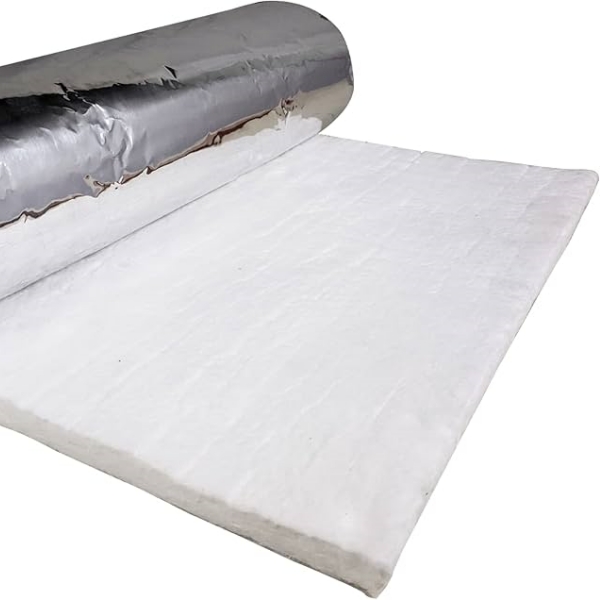
Ask Which Bond Must Remain Functional
There are two different connections to consider: the attachment of the foil to the ceramic core, and the attachment of the insulation to the equipment. A foil-to-core bond does not establish that the product has a peel-and-stick mounting backing. Specify any mounting adhesive separately rather than assuming it is included.
Ask how the foil is attached and whether that attachment is intended to remain functional throughout service. Where a bonding system is used, request its suitability at the interface temperature and under the expected loading. A binder-free core description does not establish that the complete faced material contains no bonding agents.
Include startup conditions where an enclosed space or process has restrictions on emissions. Do not assume an unfamiliar bonding system can be deliberately burned off while the foil remains adequately supported. Any temporary-bond or mechanically retained design needs explicit agreement on what holds the facing in place afterward.
For curved or vibrating components, review retention as part of the assembly. Neither a strong foil-to-core bond nor a high-temperature core specification replaces the need to support the insulation in its installed position.
Approve a Representative Assembly, Not Just a Flat Swatch
Use a sample that includes the proposed thickness, facing and bond, together with the relevant curve, seam or fixing detail. A small flat piece can show the construction but may not reveal what happens when the laminate is bent around the actual component.
Have the responsible technical team define a representative heating and cooling sequence. Inspect afterward for foil separation, tears, core movement, dimensional change and gaps at joints. Agree beforehand on which conditions are acceptable and which require a design or material change.
Where a bond-strength test is specified, record the specimen preparation, direction, temperature and conditioning. Identify where separation occurs: within the fiber core, at the interface or in the facing. A test number without that context may not explain the performance of the finished assembly.
Request the current Safety Data Sheet for the supplied material and review the controls for cutting, installing and removing it. Foil coverage is not a substitute for those controls. Likewise, a fire-protection requirement needs evidence for the specified system; it is not established by the presence of ceramic fiber alone.
Make the Delivery Unit and Finished Outline Explicit
For roll supply, state usable width, length, quantity and whether joins are permitted. Agree whether pricing is per roll, linear meter, square meter or another unit. Prices per linear meter are not directly comparable when usable widths differ.
For cut pieces, distinguish the core outline from the foil outline. Mark any required overhangs, uncovered areas, openings and edge treatment for manufacturing review. State whether dimensions apply before fitting or after the part has been formed around the component.
Confirm the available combination of core, facing, dimensions and packing rather than assuming every requested option is standard. When the equipment already supplies its own facing or enclosure, compare plain ceramic fiber insulation blanket as a separate material choice.
Send One Construction Brief With the RFQ
A useful inquiry brings the material and application together: identify the equipment, provide the layer arrangement, specify the core and facing requirements, and state what the bond must do in service. Attach the drawing, temperature profile, quantity and approval requirements.
BSTFLEX provides OEM application review and sample development. For a foil-faced requirement, use the aluminum foil ceramic fiber blanket product page as the starting point for discussing the proposed construction. For other material families, consult the high-temperature insulation material range.
Request a quotation and sample review with the complete construction brief. The aim is to approve a laminate that meets the installed requirement, not just a ceramic core with a temperature figure attached to it.