Elegir entre unjunta de expansión de tejidoy unjunta de expansión metálicaNo se trata simplemente de qué producto es más resistente o qué material soporta la temperatura más alta. La elección correcta depende del funcionamiento del sistema, la presión a la que opera, el fluido que lo atraviesa, el tamaño del conducto o tubería y la carga que puede transferirse a los equipos conectados.
En general, las juntas de expansión de tela son muy eficaces en sistemas de conductos grandes y de baja presión que transportan aire caliente, gases de escape o gases de combustión, mientras que los fuelles metálicos se suelen elegir para tuberías presurizadas y sistemas de procesos donde la contención de la presión y la resistencia mecánica son fundamentales.
La siguiente comparación explica en qué aspectos cada diseño ofrece el mejor rendimiento y qué factores deben evaluarse antes de especificar una junta de dilatación.
Decisión rápida:
Elige unjunta de expansión de tejidocuando la aplicación implica grandes conductos, baja presión, movimiento lateral o combinado sustancial, vibración, gases calientes o cargas de reacción admisibles limitadas.
Elige unjunta de expansión metálicacuando la aplicación implica tuberías presurizadas, vapor, líquidos, cargas mecánicas elevadas o un sistema diseñado específicamente en torno a fuelles metálicos.
| Factor de selección | Junta de expansión de tejido | Junta de expansión metálica |
|---|---|---|
| Servicio típico | Conductos industriales y medios gaseosos | Tuberías, recipientes y sistemas de procesos de ingeniería |
| Capacidad de presión | Principalmente aplicaciones de baja presión | Puede diseñarse para presiones sustancialmente más altas. |
| Conductos de gran tamaño | Muy adecuado | Posible, pero generalmente más complejo desde el punto de vista mecánico. |
| Movimiento axial | Excelente cuando está bien diseñado. | Excelente con geometría de fuelle adecuada |
| Movimiento lateral | Gran capacidad de movimiento en configuraciones compactas. | Normalmente requiere una configuración de fuelle adecuada. |
| Movimiento angular | Puede acomodar movimientos combinados | Disponible con configuraciones personalizadas. |
| Aislamiento de vibraciones | Muy buena flexibilidad | Depende de la aplicación |
| Fuerza de resorte | Generalmente bajo | Los fuelles generan fuerzas elásticas medibles. |
| Sistema de materiales | Tejidos compuestos, membranas y aislamiento | Fuelle de aleación metálica |
| Medios comunes | Aire caliente, gases de escape, gases de combustión, gases de proceso | Vapor, líquidos, gases y fluidos de proceso |
| Geometría típica | Formas redondas, rectangulares y grandes personalizadas | Principalmente redondas, aunque también hay disponibles diseños rectangulares fabricados con precisión. |
Una de las maneras más fáciles de comenzar el proceso de selección es determinar si la junta de expansión se va a instalar en un conducto industrial grande o en un sistema de tuberías presurizadas.
Ajunta de expansión de tejido no metálicoEs especialmente adecuado para grandes conductos de aire y gas. Estos sistemas se encuentran frecuentemente en centrales eléctricas, fábricas de cemento, acerías, hornos industriales, sistemas de recolección de polvo, equipos de combustión e instalaciones de escape.
El fluido de proceso suele ser gaseoso y la presión suele ser relativamente baja en comparación con las tuberías de proceso presurizadas.
Una junta de expansión metálica utiliza finas ondulaciones metálicas conformadas para crear flexibilidad a la vez que mantiene la contención de la presión. Los fuelles metálicos se utilizan ampliamente en sistemas de vapor, tuberías de proceso, petroquímicas, químicas y otros sistemas de ingeniería donde la presión es un requisito de diseño fundamental.
Esta diferencia en el entorno de aplicación explica muchas de las diferencias de rendimiento entre las dos tecnologías.
La presión suele ser el primer factor que diferencia una junta de dilatación de tela de un fuelle metálico.
Las juntas textiles están diseñadas principalmente para conductos de baja presión. Su elemento flexible consta de tejidos recubiertos, capas de refuerzo, membranas de sellado y aislamiento, en lugar de un fuelle metálico que contenga la presión.
Se encuentran comúnmente en:
Un fuelle metálico puede diseñarse para soportar una presión interna considerablemente mayor. Su pared metálica ondulada está diseñada para proporcionar flexibilidad y contención de la presión.
Esto hace que las juntas de expansión metálicas sean adecuadas para aplicaciones como:
Regla de selección:Si es necesario contener una presión significativa en el sistema, normalmente se deben evaluar primero los fuelles metálicos. Las juntas de expansión de tela no deben considerarse un sustituto directo de un fuelle metálico resistente a la presión.
El movimiento es donde los diseños de tela se vuelven particularmente atractivos.
Una correa de tela puede deformarse en un área relativamente amplia. Esto le permite acomodar desplazamientos axiales, laterales y angulares sustanciales sin depender de múltiples pliegues metálicos preformados.
En sistemas de conductos de gran tamaño donde la dilatación térmica se produce en más de una dirección, esto puede simplificar considerablemente la disposición de las juntas de expansión.
Los fuelles metálicos también pueden adaptarse a estos movimientos, pero la configuración del fuelle debe diseñarse específicamente en función de ellos.
For example, larger lateral displacement may require a universal metallic expansion joint with multiple bellows and a center pipe rather than a single bellows element.
Therefore, when large lateral or combined movement is required in a low-pressure duct, afabric expansion jointis often the more practical design.
This is an important engineering difference that is often overlooked during purchasing.
A metallic bellows behaves like a mechanical spring. When it is compressed, extended or laterally displaced, it generates reaction forces that must be considered in the piping design.
These forces may influence:
Fabric expansion joints generally produce much lower spring forces because the flexible textile element is considerably softer than formed metal bellows.
For large duct systems connected to fans, furnaces or lightweight structural components, reducing these reaction loads can be a major advantage.
Fans, blowers, turbines and other rotating equipment can transmit vibration into connected ductwork.
A flexible fabric connector can help isolate some of this vibration because the textile belt does not create the same rigid mechanical path as solid ductwork.
This makes fabric expansion joints especially useful around:
Metal expansion joints can also accommodate vibration, but the movement amplitude, frequency and expected cycle life must be considered carefully in the bellows design.
For high-cycle vibration, neither product should be selected solely from a general product specification. Actual vibration data should be supplied to the manufacturer.
Large rectangular ductwork strongly favors fabric construction in many industrial systems.
Consider an exhaust duct measuring several meters across. Producing a metallic flexible element for such a large cross-section requires substantial metal fabrication and careful control of corner stresses.
A rectangular fabric joint can use a flexible belt installed around the perimeter of the duct, making very large dimensions more practical.
This is whyrectangular fabric expansion jointsare frequently seen in:
For these applications, size alone can significantly influence the final choice.
It is incorrect to assume that metal is always better at high temperature or that fabric automatically has a lower usable process temperature.
The two systems manage temperature differently.
Metallic bellows temperature capability is determined primarily by the selected alloy, design pressure, material strength at temperature and expected fatigue life.
Stainless steels and nickel-based alloys can be selected for elevated-temperature service.
A high-temperature fabric expansion joint may use several thermal layers rather than exposing one flexible membrane directly to the process gas.
A typical construction may include:
The insulation package can reduce the temperature reaching the external sealing materials.
Therefore, ahigh temperature fabric expansion jointshould be selected based on the full temperature gradient through the joint, not simply on the temperature rating of one fabric.
Hot flue gas and exhaust systems are among the most common applications for non-metallic designs.
These installations often combine:
That combination closely matches the strengths of fabric expansion joints.
Typical installations include:
For customized designs, BSTFLEX manufacturesNon Metallic Fabric Expansion Jointsfor industrial ducting, hot-air, flue-gas and exhaust applications.
Corrosion resistance cannot be judged simply by comparing “fabric” with “metal.”
The actual materials must be compared.
A metallic expansion joint may use corrosion-resistant stainless steel or nickel alloy when aggressive media are present.
A fabric expansion joint may use chemical-resistant barrier layers such as PTFE-coated textiles or other compatible membrane systems.
Selection should consider:
Condensation is particularly important in flue-gas systems because chemical attack may become more severe when corrosive gases condense on cooler joint surfaces.
Neither fabric nor metallic bellows should necessarily be exposed directly to severe turbulent flow or abrasive particles without protection.
A fabric joint may use:
A metallic bellows may also require an internal liner to prevent erosion, turbulent excitation or direct impingement on the convolutions.
This means gas velocity, dust loading and flow direction should always be included in the expansion joint specification.
Available space can strongly affect the decision.
A fabric joint can often absorb considerable lateral movement within a relatively short flexible span.
Metallic systems can also accommodate large displacement, but may require more complex arrangements such as universal joints, hinged joints or gimbal configurations depending on movement direction.
However, there are also piping layouts where a compact metallic bellows is the more appropriate design.
Installation space should therefore be considered together with pressure and movement rather than as an isolated factor.
Fabric flexible elements are generally lighter than comparable large metallic assemblies.
This difference becomes increasingly important as duct dimensions increase.
Lower component weight can reduce loads during:
In very large rectangular duct systems, this can be an important practical advantage.
Fabric expansion joints are often designed with replaceable flexible belts.
If the surrounding steel frames remain serviceable, maintenance may involve replacing the flexible element rather than removing the complete assembly.
This can be useful in large duct installations where removing welded steel frames would create significant shutdown work.
Metal expansion joints generally require replacement or repair of the metallic bellows assembly when the bellows itself becomes damaged.
The actual maintenance cost depends on system design, accessibility, joint size and failure mode.
There is no meaningful universal statement such as “metal lasts longer than fabric.”
Service life depends on whether the joint was correctly designed for the application.
A fabric joint can fail prematurely because of:
A metal bellows can fail because of:
Correct engineering matters more than simply choosing one material category over another.
| Application | Usually Preferred | Reason |
|---|---|---|
| Large Low-Pressure Flue Gas Duct | Fabric Expansion Joint | Large size, flexibility and multidirectional movement |
| High-Pressure Steam Pipe | Metal Expansion Joint | Pressure containment requirement |
| Large Rectangular Exhaust Duct | Fabric Expansion Joint | Practical for large custom cross-sections |
| Fan Connection | Fabric Expansion Joint | Low reaction forces and vibration isolation |
| Pressurized Chemical Pipeline | Metal Expansion Joint | Pressure and mechanical requirements |
| Cement Kiln Exhaust Duct | Fabric Expansion Joint | Hot gas, large duct and substantial movement |
| Process Piping | Metal Expansion Joint | Engineered for piping pressure and code requirements |
| Large Boiler Flue Duct | Fabric Expansion Joint | Low-pressure hot-gas application |
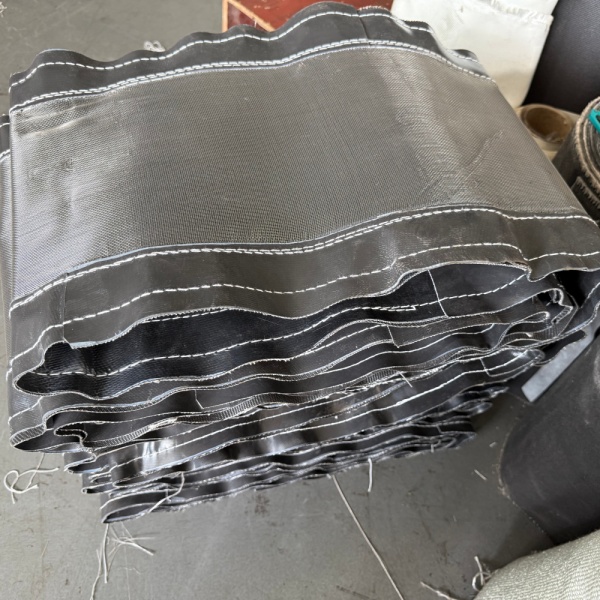
Afabric expansion jointshould be seriously considered when most of the following conditions are present:
This is the typical application envelope for anon metallic expansion joint.
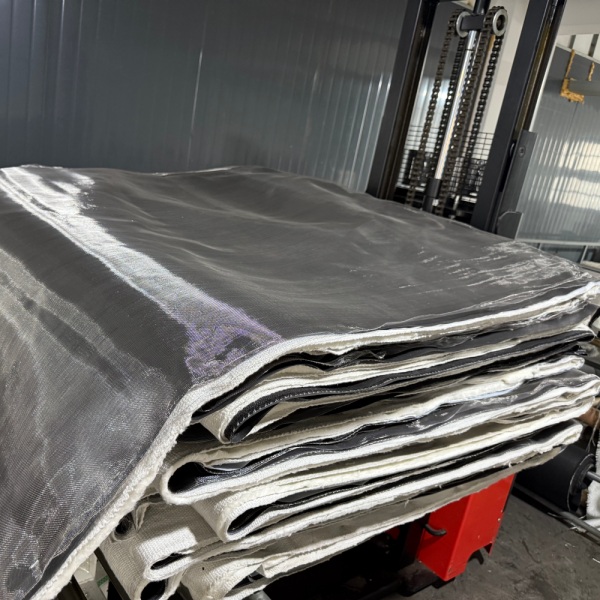
A metallic expansion joint should normally be evaluated first when:
Metallic bellows are engineered pressure-containing components and should be designed around system pressure, temperature, movement, material, fatigue life and piping loads.
Instead of asking, “Which expansion joint is better?” engineers should ask, “Which expansion joint architecture matches this system?”
Use the following sequence.
Is it a large duct or pressurized pipe?
Specify normal pressure, design pressure and whether the system operates under positive or negative pressure.
Provide both continuous operating temperature and maximum excursion temperature.
List axial compression, axial extension, lateral displacement and angular movement individually.
Specify hot air, exhaust gas, flue gas, steam, liquid or process chemical.
Include gas velocity, dust loading, abrasive particles and turbulence.
Determine how much reaction force can safely be transferred to fans, duct supports, equipment nozzles and anchors.
Confirm shape, dimensions, flange arrangement and available face-to-face installation length.
Consider a large rectangular flue-gas duct installed downstream of industrial combustion equipment.
The system has:
In this situation, a fabric expansion joint is often an efficient choice because it can combine large cross-section capability, multidirectional flexibility and low reaction forces.
Now consider a high-pressure steam line operating at elevated temperature.
Although thermal movement still exists, the system requires reliable pressure containment. A metallic bellows engineered for the piping pressure, temperature and movement is generally the appropriate technology.
These examples demonstrate why the operating system must determine the expansion joint type.
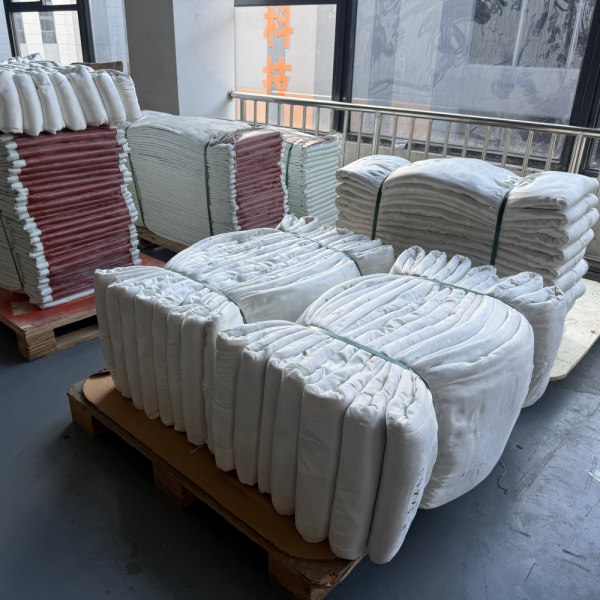
For either metallic or fabric designs, the quality of the engineering recommendation depends heavily on the information supplied.
For a custom fabric joint, BSTFLEX recommends providing:
BSTFLEX manufactures custom non-metallic expansion joints for industrial hot-air, exhaust and flue-gas ducting systems.
Depending on operating conditions, flexible constructions can incorporate technical fabrics, coated fiberglass, PTFE-based sealing layers, high-temperature insulation and protective components.
Round, rectangular and application-specific configurations can be manufactured according to customer drawings and operating data.
See theJunta de expansión de tejido no metálico BSTFLEXpara opciones de fabricación personalizadas.
Si su aplicación utiliza un conducto industrial de gran tamaño que transporta aire caliente, gases de escape o gases de combustión, envíe a BSTFLEX su plano y las condiciones de funcionamiento para su evaluación.
Incluya las dimensiones del conducto, la temperatura, la presión, el fluido, el movimiento axial, el movimiento lateral, la longitud entre caras y la cantidad.
Solicite un presupuesto para juntas de expansión de tela a medida.

 English
 français
 Deutsch
 русский
 italiano
 português
 Nederlands
 العربية
 日本語
日本語 한국의
한국의 Türkçe
 Polski
 Tiếng Việt
 slovenský
 Indonesia