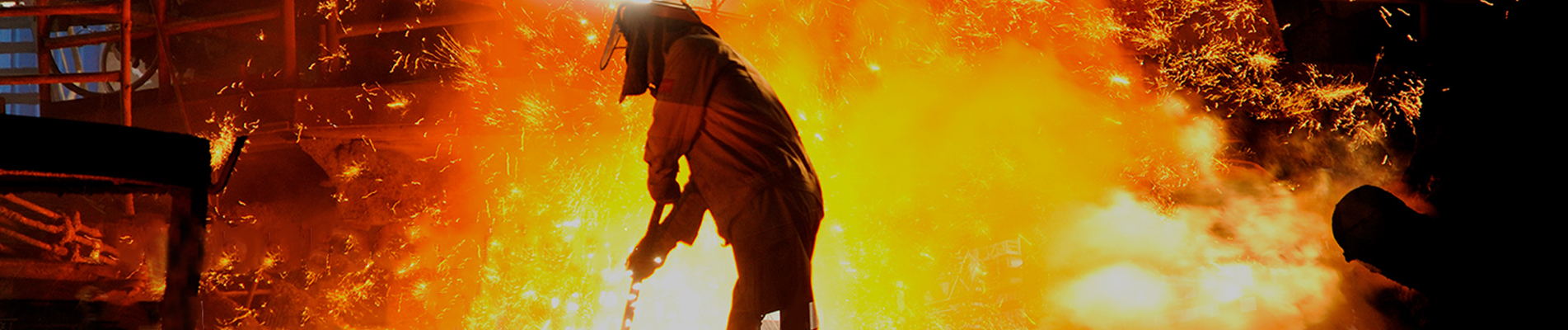
The flexible connections around an induction furnace need their own protection plan. A water-cooled power lead, a separate cooling-water hose and a hydraulic line can run through the same area while performing very different jobs. Their outside diameters may look similar, but their electrical, cooling and mechanical requirements are not interchangeable.
Fire sleeve for induction melting provides an external protective layer where suitable hoses and leads face radiant heat or molten-metal splash. Selection should account for the exposure at the actual installation, furnace movement and access for inspection. The sleeve supplements the approved assembly; it does not replace the power lead's insulation, cooling circuit or pressure-containing hose.
The BSTFLEX fire sleeve range includes silicone-coated fiberglass constructions for evaluating these external protection requirements on foundry equipment.
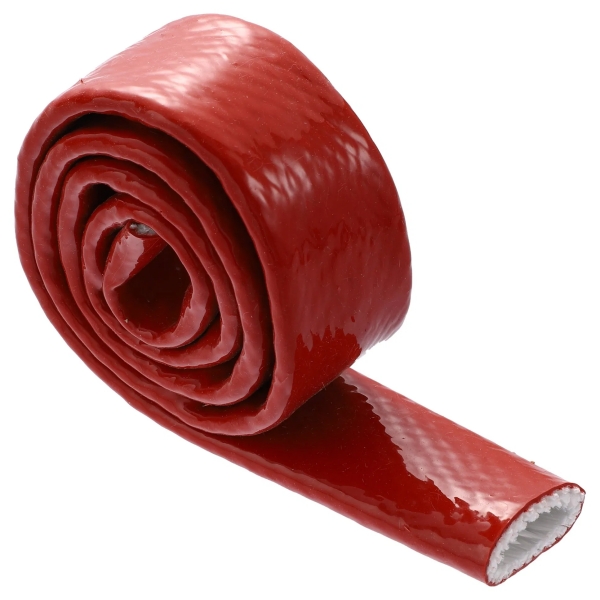
Use the equipment drawing to identify what is inside each protected section. In particular, do not describe a water-cooled electrical lead simply as a water hose on the inquiry.
| Protected assembly | Function | Key information for sleeve selection |
|---|---|---|
| Water-cooled power lead | Carries electrical current through conductors while circulating water removes heat. | Finished hose dimensions, terminal arrangement, electrical clearances, cooling requirements and movement. |
| Separate cooling-water hose | Supplies or returns cooling water without serving as the power conductor. | Hose specification, connections, allowable bend radius, leak-inspection access and external exposure. |
| Hydraulic hose | Transmits fluid power to equipment such as furnace tilting or auxiliary mechanisms. | Hose and fluid limits, pressure duty, movement, rubbing points and the heat source. |
Identify each circuit separately even when several lines share a support. Do not combine them inside one oversized cover without the equipment designer's review of movement, cooling, electrical separation and inspection access.
The metal bath temperature is not the continuous operating temperature of the sleeve. Describe where the protected line sits relative to the furnace opening, pouring area, hot surfaces and existing barriers.
Record whether the concern is sustained radiant heating, occasional droplets, repeated splash or possible contact with a hot surface. Include the metal or alloy and any slag exposure. A general molten-splash description is not enough to approve every material against every foundry process.
The BSTFLEX EFRS silicone-coated fiberglass fire sleeve uses a braided fiberglass body beneath silicone rubber and is offered for hose and cable protection in high-temperature industrial environments. It is a product to assess against the specified exposure, not an automatic qualification for the complete furnace circuit.
Request applicable product data and test evidence with the exposure duration and acceptance criteria. Where the hazard includes a sustained stream, pooled metal or a furnace runout, require a separate engineered protection assessment. Do not treat a hose sleeve as a substitute for the equipment's protective barriers.
A water-cooled power lead contains more than an outer rubber hose. Its conductor arrangement, terminals and water passage work together. Internal deterioration can restrict cooling flow even when the outside still looks serviceable.
Before specifying a replacement cover, establish why the existing protection was damaged. Local external splash and overheating caused by restricted water flow require different corrective actions. Adding a thicker sleeve will not repair a deteriorated conductor, a poor electrical connection or a cooling restriction.
Have the furnace or lead manufacturer review the proposed external covering against the operating duty. Retain the required water flow, temperature limits and monitoring arrangements. Do not compress the underlying hose with an undersized cover or relocate its supports simply to make the sleeve fit.
External insulation changes heat transfer around the assembly. Its suitability therefore needs to be checked with the lead operating within its approved electrical and cooling conditions, rather than judged only from the temperature rating printed on the sleeve datasheet.
Do not use a fire sleeve's material description as a voltage rating for the completed power lead. Retain the specified hose insulation, terminal spacing and electrical clearances. A thermal cover does not authorize touching an energized lead.
Have the equipment manufacturer approve closures and retention hardware near power connections and induction components. Metal snaps, bands or other attachments must not bridge required clearances or create an unintended contact point.
For a tilting furnace, prepare a route drawing showing the lead and hose positions through the permitted movement. A photograph taken with the furnace upright is useful, but it does not describe the complete installation.
Check where the sleeved section bends, approaches a support, changes direction or passes a neighboring line. Establish whether the sleeve can slide back from a required protected area or gather into folds that interfere with movement.
Include the larger outside dimensions of the finished cover at brackets and guides. With a removable construction, check that the overlap remains effective between fasteners and around bends. The sleeve should follow the approved route without forcing the underlying assembly below its permitted bend radius.
Use the equipment team's approved method for the movement assessment, with personnel kept clear of moving equipment. Do not position or adjust the sleeve by hand while the furnace or its connected mechanisms are moving.
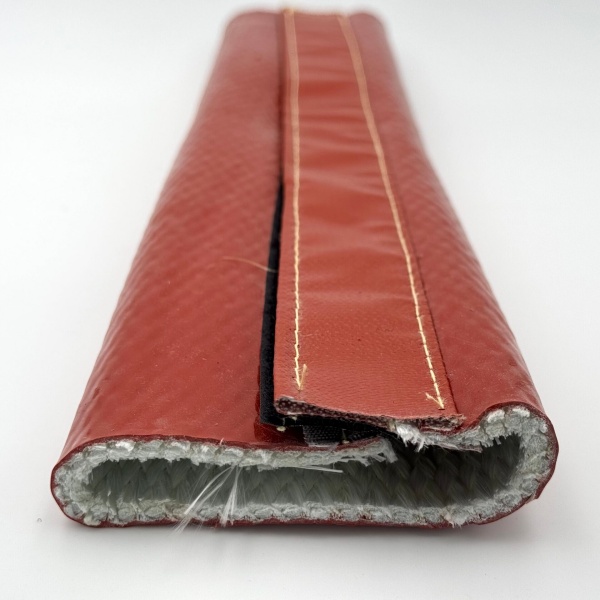
For a new or rebuilt power lead, tubular firesleeve can be considered as part of the lead manufacturer's assembly process. Confirm when the sleeve is installed and whether it can pass the terminal geometry. The hose diameter alone does not resolve that question.
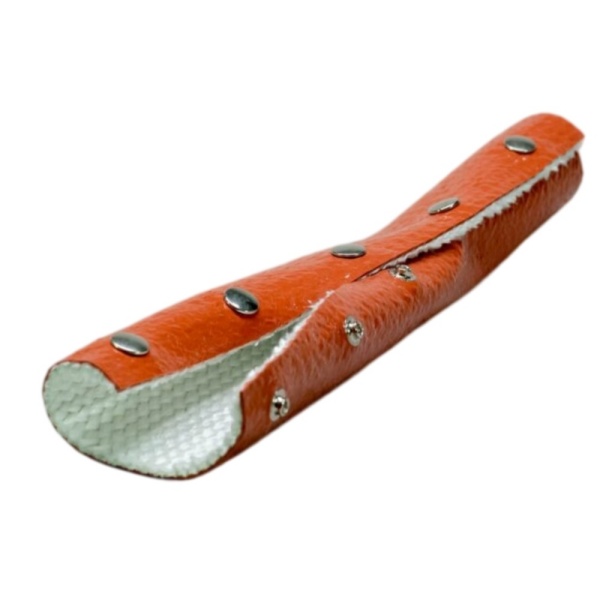
For an existing connection without end access, a snap wrap firesleeve offers a lengthwise-opening format to evaluate. Specify the usable closed fit, seam position and inspection access. Confirm that the proposed closure is acceptable for the electrical and thermal environment.
Where a flange, branch or support prevents a standard sleeve from covering the required area, submit the geometry for a purpose-made cover assessment. Cutting openings into a standard product changes its coverage and should not become an undocumented field modification.
Use the fire sleeve size chart and fitting-clearance guide for the dimensional starting point. Then approve the actual installed configuration rather than transferring a nominal size from another furnace.
For a cooling-water hose, keep connection checks and leak detection practical. Do not cover a suspected leak to improve the appearance of the installation. Water reaching molten metal can cause an explosion; an external sleeve is not a leak-containment system.
For hydraulic lines near the furnace, the BSTFLEX hydraulic hose fire sleeve provides a product starting point for external thermal protection. Review the actual fluid, hose limits, routing and rubbing conditions separately. The added sleeve does not increase the hose pressure rating or provide a qualified hose-burst restraint.
Record the selected cover against the correct circuit. A spare sleeve approved for a hydraulic line should not automatically be fitted to a water-cooled electrical lead because the dimensions happen to match.
Decide how technicians will inspect the hose or lead beneath the cover. Identify the sections that need to open, the terminal areas that need access and the labels that must remain readable. For a sectional cover, specify the joint coverage rather than leaving installers to choose an overlap.
During an authorized inspection, examine both the sleeve and the underlying assembly. Look for displaced coverage, damaged coating, exposed textile, failed closures and local rubbing. Have the appropriate specialist assess leakage, deformation, electrical damage or abnormal heating.
A sleeve that can still be fastened after a splash event is not necessarily fit for reuse. Apply the agreed inspection and replacement criteria, including any event-based replacement requirement. Keep a record of the damage location; repeated damage at one point warrants a routing or barrier review, not just repeated sleeve replacement.
Install or remove protection only after the furnace has reached the condition required by its maintenance procedure. Do not perform hands-on sleeve work while the equipment contains molten metal or while the relevant electrical or mechanical hazards remain uncontrolled.
Follow the prescribed shutdown and cooldown sequence, including continued cooling wherever required. Switching off melting power is not permission to interrupt cooling. Qualified personnel must establish and verify the specified energy-isolation condition before work begins.
Do not bypass flow, temperature, ground-fault or other safety systems to carry out a sleeve trial. A product-fit evaluation must remain within the equipment manufacturer's safe operating and maintenance arrangements.
A marked-up route drawing is more useful than an inquiry that states only furnace capacity and sleeve diameter. Include the following application information with the requested quantities.
| Project information | Details to provide |
|---|---|
| Circuit identification | Water-cooled power lead, cooling-water hose or hydraulic hose, with the existing assembly reference. |
| Operating duty | Furnace application and lead manufacturer's relevant electrical, cooling and service requirements. |
| External exposure | Metal or alloy, heat-source location, splash direction, duration and existing barriers. |
| Geometry and movement | Finished outside dimensions, terminal drawings, protected length, supports and the complete permitted route. |
| Service access | New assembly or retrofit, accessible ends, inspection points and preferred closure where specified. |
| Acceptance requirements | Required product documents, sample checks, thermal verification and approval by the equipment or lead manufacturer. |
For a replacement project, include photographs of the previous cover and its damage pattern. For a new installation, provide the proposed mounting and coverage details before approving production lengths.
Do not assume equivalence. The coating and finished wall construction are part of the protective design. Match the selected product to the required heat, splash and installation conditions rather than comparing fiberglass content alone.
No. It can be considered for external heat exposure, but it does not correct inadequate cooling or an internal electrical fault. Establish the cause of overheating before selecting or changing the external cover.
Not by product name or diameter alone. Compare the electrical duty, cable construction, movement, exposure and required cover design. A standard tubular sleeve is not automatically equivalent to a purpose-designed multilayer furnace cable cover.
BSTFLEX supplies silicone-coated fiberglass fire sleeves for external hose and cable protection, with special thickness, length and packing options available for review. For induction melting projects, the proposed sleeve must be matched to the actual lead or hose assembly.
Send the circuit identification, route drawing, outside dimensions, exposure details and quantity. State whether the requirement is a tubular sleeve for a new lead or an openable cover for an existing installation.
Request product data, samples or a foundry fire sleeve quotation. Include the equipment manufacturer's requirements so the external protection can be evaluated without changing the approved electrical, cooling or hydraulic design.

 English
 français
 Deutsch
 русский
 italiano
 português
 Nederlands
 العربية
 日本語
日本語 한국의
한국의 Türkçe
 Polski
 Tiếng Việt
 slovenský
 Indonesia